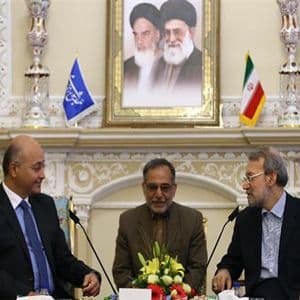
In a Sunday meeting with visiting Deputy Secretary General of the Patriotic Union of Kurdistan (PUK) of Iraq Barham Salih, Larijani said that support for the national unity government in Iraq as a symbol of unity among all ethnicities and groups, including Kurds, Shias and Sunnis, is the sole way to overcome the existing problems in the Arab country.
Larijani further pointed to friendly and brotherly ties between Tehran and Baghdad, stressing the need for joint efforts to settle the crises in Iraq.
The Islamic Republic of Iran has always stood by the Iraqi nation and government and is ready to offer any kind of assistance, he said.
The top Iranian parliamentarian further dismissed as “wishful thinking” the West’s scheme to disintegrate Iraq and Syria, saying certain Western leaders are under the illusion that by dividing countries they can achieve their goals in the region.
A draft of a US annual defense bill, which was released on April 27 by the House Armed Services Committee, urges the US government to recognize separate Kurdish and Sunni states and provide them with at least 25 percent of the USD-715-million aid money allegedly planned to be given to the Iraqi government to help it fight the ISIL terrorist group.
The draft bill also says the figure could even amount to 60 percent of the money, about USD 429 million.
Salih, for his part, praised Iran's support for the Iraqi nation and government in their fight against terrorism, saying that the Iraqi people are determined to intensify their campaign against the ISIL Takfiri terrorists.
The ISIL terrorists currently control parts of Iraq and neighboring Syria. They have carried out heinous crimes in the two countries, including mass executions and beheadings of people.
He said that terrorism and extremism have posed a major threat to the region, calling for concerted efforts by regional countries to uproot the scourges.
The Iraqi official further highlighted Iran’s key role in providing security and stability in the region and underlined the necessity for mutual consultations between the two countries’ officials on bilateral and regional issues.